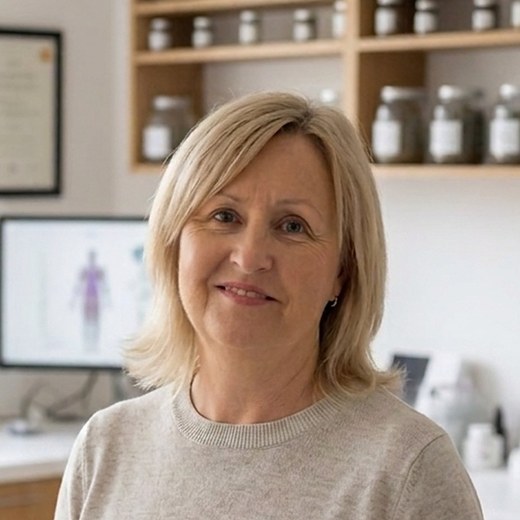
Most people who come to Deb with stress and anxiety have been carrying it for a long time. They are functioning. They are getting through the week. But it is costing more than it used to, and the body has started keeping score.
What this often looks like
You do not need to have a diagnosis to work with Deb, and you do not need to have all of these:
- A mind that will not stop. Racing thoughts at 2am, replaying conversations, planning for problems that have not happened
- Physical tension you cannot put down. A tight jaw, shoulders around your ears, shallow breathing you only notice when someone points it out
- Digestive symptoms that track your stress. Churning before difficult days, appetite that disappears or will not switch off
- Sleep that has stopped restoring you. Difficulty falling asleep, or waking at the same hour every night
- Energy that crashes and spikes. Exhausted by mid-afternoon, wide awake at 10pm
- A shorter fuse than you would like. Less patience with people you care about, and guilt about that
These feed each other. Poor sleep lowers your tolerance for stress; higher stress makes sleep worse. Deb's interest is in where that loop is being held, rather than treating each part as a separate problem.
How Deb approaches it
A long first conversation
The initial consultation is 60 minutes, and because Deb has already read your intake form and test results, that hour is spent on your actual story. When it started. What was happening in your life at the time. What you have already tried and what happened when you did.
Looking at the physical picture too
Chronic stress affects sleep, digestion, appetite, energy and hormonal patterns. Where it is useful, Deb will look at recent pathology or suggest testing, so decisions are based on information rather than guesswork. Testing is always optional and the cost is discussed before anything is arranged.
Herbal and nutritional support, chosen for you
Where herbal medicine or nutritional support is appropriate, it is selected for your situation and checked against everything you are already taking. Deb uses MIMS and N-Pod to check interactions before recommending anything.
Clinical hypnotherapy and counselling where they fit
Some people want practical tools for the mental side of it as well. Deb is a clinical hypnotherapist and holds an Advanced Diploma in Psychotherapy and Counselling, so that work can happen with the same practitioner rather than being sent elsewhere. More about clinical hypnotherapy online.
Being honest about what this is not
Naturopathy is not a treatment for a diagnosed anxiety disorder, and Deb will not describe it that way. She does not diagnose mental health conditions, does not replace a psychologist or psychiatrist, and does not ask anyone to stop taking prescribed medication.
What she offers is support for the whole person alongside whatever medical or psychological care you already have. If what you describe needs a different kind of help, she will say so, and say it early rather than after you have paid for a course of appointments.
When to seek medical care first
Please speak to a doctor or mental health professional, rather than starting here, if you are experiencing any of the following:
- Thoughts of harming yourself or someone else
- Panic symptoms that include chest pain, which always needs medical assessment
- A sudden change in mood or thinking that is unlike you
- Symptoms that are stopping you from working, eating or caring for yourself
- Anything that has come on suddenly and severely
Common questions
A naturopath cannot diagnose or treat an anxiety disorder. What Deb can do is support the whole person alongside your existing medical care, looking at sleep, nutrition, nervous system load and the physical symptoms that travel with long-term stress. If you need diagnosis or psychological treatment, that belongs with a doctor, psychologist or psychiatrist.
Yes, and you should tell Deb exactly what you are taking. Several herbs interact with psychiatric medications, which is precisely why every prescription is interaction-checked before it is recommended. Deb will never ask you to stop or reduce a prescribed medication. That is a decision for you and your prescriber.
Long-term stress affects sleep, digestion, appetite and energy, and many people notice physical symptoms that rise and fall with what is happening in their life. That said, physical symptoms should never simply be assumed to be stress. Deb will encourage you to have anything unexplained properly investigated by a doctor rather than attributing it to stress by default.
No. Many people who work with Deb have never been diagnosed with anything. You need to be an adult, willing to talk openly about your health, and not in crisis.
That is common and it works well. Deb's work sits alongside psychological care rather than competing with it, and she will encourage you to keep your other practitioners informed.